Streamlining Web Automation with the Apify Client
The Apify Client is a powerful tool that simplifies web automation tasks, providing a seamless interface to interact with the Apify platform and its various functionalities. Whether you’re a seasoned developer or just starting your web automation journey, the Apify Client can streamline your workflow and boost your productivity.
This article provides a comprehensive guide on how to use the Apify Client for various web automation tasks, including:
- Running Actors
- Accessing Datasets
- Managing Storages
- Monitoring Tasks
Installation
Before diving into the functionalities, let’s install the official Apify Client for Python. You can easily install it using pip (making sure to use apify-client, not just apify):
pip install apify-client
Initializing the Client
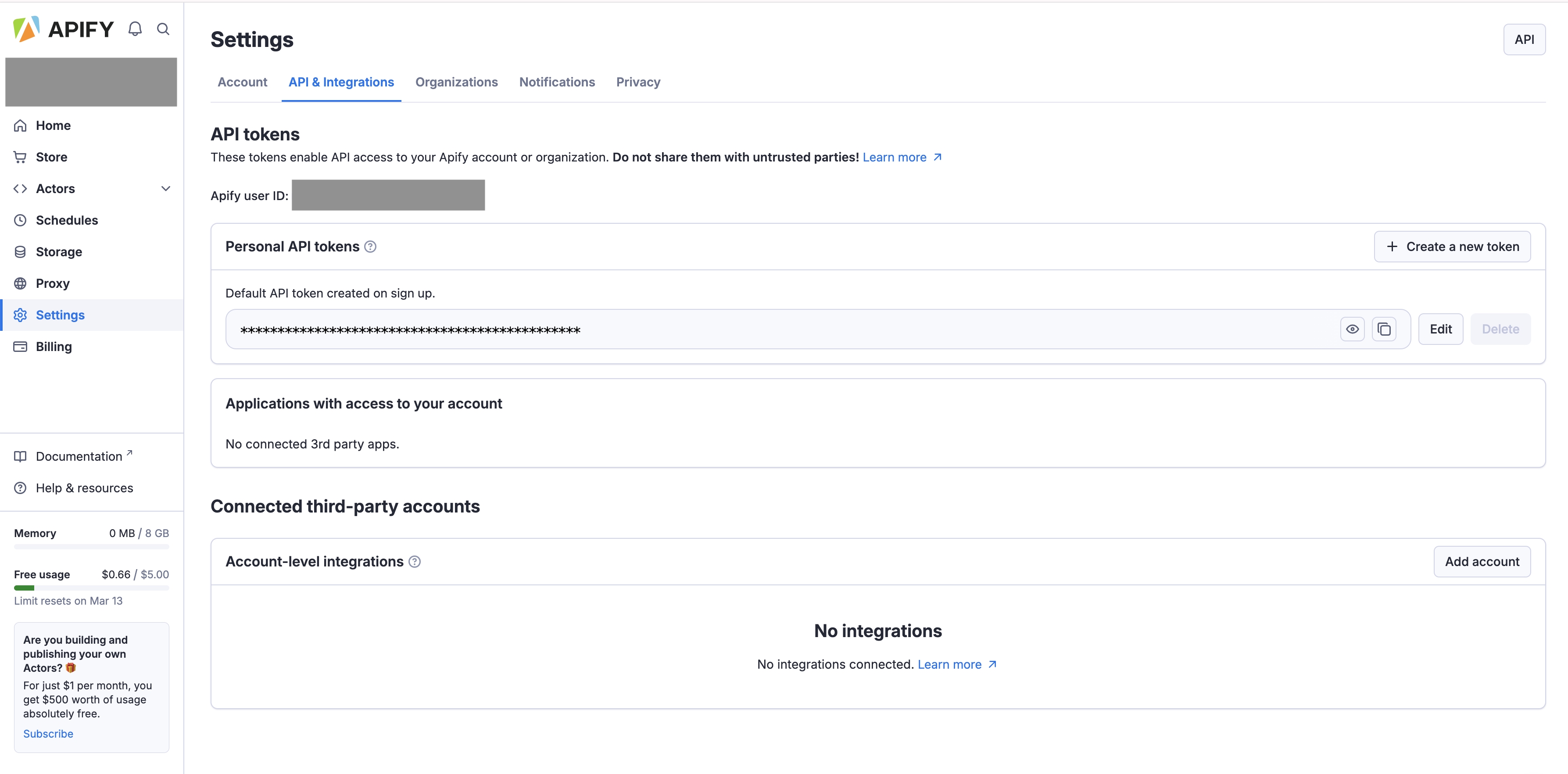
Once installed, you can initialize the Apify Client using your API token. You can find your API token in your Apify account settings under Integrations.
from apify_client import ApifyClient

# Start your client using the token
client = ApifyClient("YOUR_API_TOKEN")
Running Actors
Actors are the core building blocks of Apify, representing cloud programs that can perform various web automation tasks. With the Apify Client, you can effortlessly run actors remotely, wait for them to finish, and retrieve their results.
import json

# Define the Actor you want to run
actor_id = "novi/fast-tiktok-api"

# Prepare the input for the Actor
run_input = {
    "urls": ["https://www.tiktok.com/@nike/video/7292265008580529450"],
    "downloadVideo": True
}

# Start the actor and wait for it to finish gracefully
print("Starting the fast-tiktok-api actor...")
actor_run = client.actor(actor_id).call(run_input=run_input)
print(f"Actor run finished! Run ID: {actor_run['id']}")
Accessing Datasets
Datasets are structured collections of data extracted during actor runs (often saved in JSON or CSV). The Apify Client allows you to easily download and iterate through these datasets.
# Access the default dataset associated with the actor run we just executed
dataset_id = actor_run.get("defaultDatasetId")

if dataset_id:
    # Fetch the items from the dataset
    dataset_items = client.dataset(dataset_id).list_items().items

    # Iterate over dataset items and extract specific fields
    for item in dataset_items:
        author = item.get("author", {}).get("nickname", "Unknown")
        likes = item.get("statistics", {}).get("diggCount", 0)
        print(f"Video by {author} has {likes} likes.")
else:
    print("No dataset generated by this run.")
Managing Storages
Besides Datasets, Apify provides Key-Value Stores (great for files, images, state) and Request Queues (for managing URLs to scrape). Here is how you interact with a Key-Value Store:
# Access a specific key-value store by its name
key_value_store = client.key_value_store("my-custom-store")

# Set a record (e.g., save a JSON state or a string)
key_value_store.set_record("my-setting", "completed")

# Retrieve a record later
record = key_value_store.get_record("my-setting")
if record:
    print(f"Value retrieved: {record['value']}")
Conclusion
The Apify Client is a versatile tool that simplifies web automation tasks, providing a user-friendly interface to interact with the Apify platform. By leveraging the Apify Client, you can streamline your web automation workflow, improve efficiency, and focus on building powerful web automation solutions.
Related Articles
- 🛡️ Web Scraping Challenges and Solutions — Common obstacles and how to overcome them
- 📈 Riding the TikTok Wave: Identifying Trending Videos — Use the Apify Client with TikTok trend data
- 🔄 Navigating Container Migration in Apify Actor Runs — Advanced: ensure data reliability in long-running scrapes
Looking for data extraction tools?
Check out our comprehensive collection of no-code scrapers and APIs for TikTok, X.com, and more.